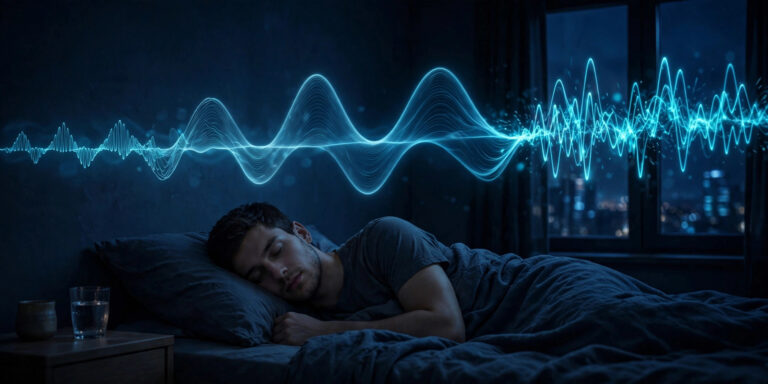
Why Do I Wake Up Tired After 8 Hours of Sleep? 7 Reasons
Why do I wake up tired after 8 hours of sleep? The alarm goes off at 6:30. You did everything right — you were in bed by 10:30, eight full hours on the clock. And yet your body feels like it’s made of wet cement. Your eyes burn, your brain is foggy, and by 10 a.m. you’re already eyeing the coffee machine like it owes you money.
Sound familiar? You’re not lazy, and your mattress probably isn’t the problem either. The truth is that eight hours in bed is not the same as eight hours of sleep — and even a genuine eight hours of sleep can leave you groggy if it was broken up, shallow, or interrupted at exactly the wrong moment.
The good news: the reason you’re still tired almost always falls into one of seven fixable culprits, and the most common one takes about two minutes to fix tonight. By the end of this guide, you’ll know exactly which one is yours — and what to do about it.
Why Do I Wake Up Tired After 8 Hours? The Short Answer
If you’re still tired after 8 hours of sleep, it’s rarely the amount of sleep — it’s the timing, continuity, or quality of it. The three biggest culprits:
- Your alarm woke you in the middle of a sleep cycle — dragging you out of deep sleep creates grogginess (sleep inertia) that can linger for 30 minutes or more.
- You didn’t actually sleep 8 hours — it takes most people 10–20 minutes to fall asleep, plus brief awakenings you never remember. “Lights out at 10:30, alarm at 6:30” is usually more like 7 hours of actual sleep.
- Something fragmented your sleep — afternoon caffeine, evening alcohol, snoring or undiagnosed sleep apnea, stress, or a warm bedroom can all shred sleep quality without fully waking you.
Read on to figure out which one matches your mornings — then jump to the fix that fits.
The 7 Reasons at a Glance
If you’ve been wondering why do I wake up tired after 8 hours, use this table as a quick diagnostic. Find the row that sounds most like you, then read the matching section for the full explanation and fix.
| Reason | How to tell it’s yours | Fix to try tonight |
|---|---|---|
| 1. Alarm landed mid-cycle | Groggy for 15–30+ minutes after waking, but alert by late morning | Wake at a multiple of 90 minutes from bedtime |
| 2. “8 hours” wasn’t 8 hours | Took 20+ minutes to fall asleep; remember waking up at night | Count from sleep onset, not bedtime |
| 3. Caffeine still in your system | You fall asleep fine but sleep feels shallow; afternoon coffee habit | Caffeine curfew 9 hours before bed |
| 4. Alcohol or screens ruined the second half | Fall asleep fast, then wide awake at 3 a.m. | Last drink 3–4 hours before bed; screens off 60 min before |
| 5. Breathing interruptions (snoring/apnea) | Loud snoring, morning headaches, dry mouth, daytime sleepiness | See a clinician for a sleep study |
| 6. Stress kept your brain shallow | Racing thoughts at bedtime; grogginess tracks with anxious days | Wind-down ritual + worry journal |
| 7. A medical cause | Fatigue persists for weeks despite fixing everything above | Blood tests: iron, thyroid, vitamin B12/D |
Reason 1: Your Alarm Woke You in the Middle of a Sleep Cycle
This is the most common reason of all — and the easiest to fix.
Sleep doesn’t happen in one long, flat stretch. It runs in cycles of roughly 90 minutes, moving from light sleep down into deep sleep (N3) and back up through REM. Waking up feels completely different depending on where the alarm catches you: rise out of light sleep or REM and you feel fresh; get yanked out of deep sleep and you wake up disoriented, heavy-limbed, and foggy.
That fog has a name — sleep inertia — and scientists have been measuring it carefully. A 2026 nationwide study of 2,355 adults (Kim et al., published in PLOS ONE) found the average person takes about 16 minutes to clear morning grogginess, with anxiety, insomnia, and evening chronotypes stretching it much longer. Lab research shows cognitive performance can take 15 to 30 minutes to return to baseline under normal conditions — and up to hours if you woke from deep sleep while sleep-deprived.
Here’s the cruel math: exactly 8 hours (480 minutes) is not a whole number of 90-minute cycles — it’s 5.33 cycles. So a strict 8-hour sleeper often wakes mid-cycle, in the deepest part of the wave. People who sleep 7.5 hours (5 cycles) or 9 hours (6 cycles) frequently report feeling more refreshed than 8-hour sleepers, because their alarm lands between cycles.
The bottom line: try shifting your wake time by 30 minutes in either direction for a few nights. If the grogginess lifts, your alarm timing was the whole problem.
Wake times that land between cycles
If your bedtime is 11:00 p.m. (and you fall asleep around 11:15), try these alarm times:
- 4:30 a.m. — 5 hours (3.5 cycles — only if truly necessary)
- 6:00 a.m. — 6.75 hours (~4.5 cycles, wake from light sleep)
- 7:30 a.m. — 8.25 hours (~5.5 cycles — gentler than a flat 8)
The simplest move: plug your wake time into a sleep time calculator and let it count back in 90-minute blocks — then set the alarm for one of its suggested times instead of the round-number 8.
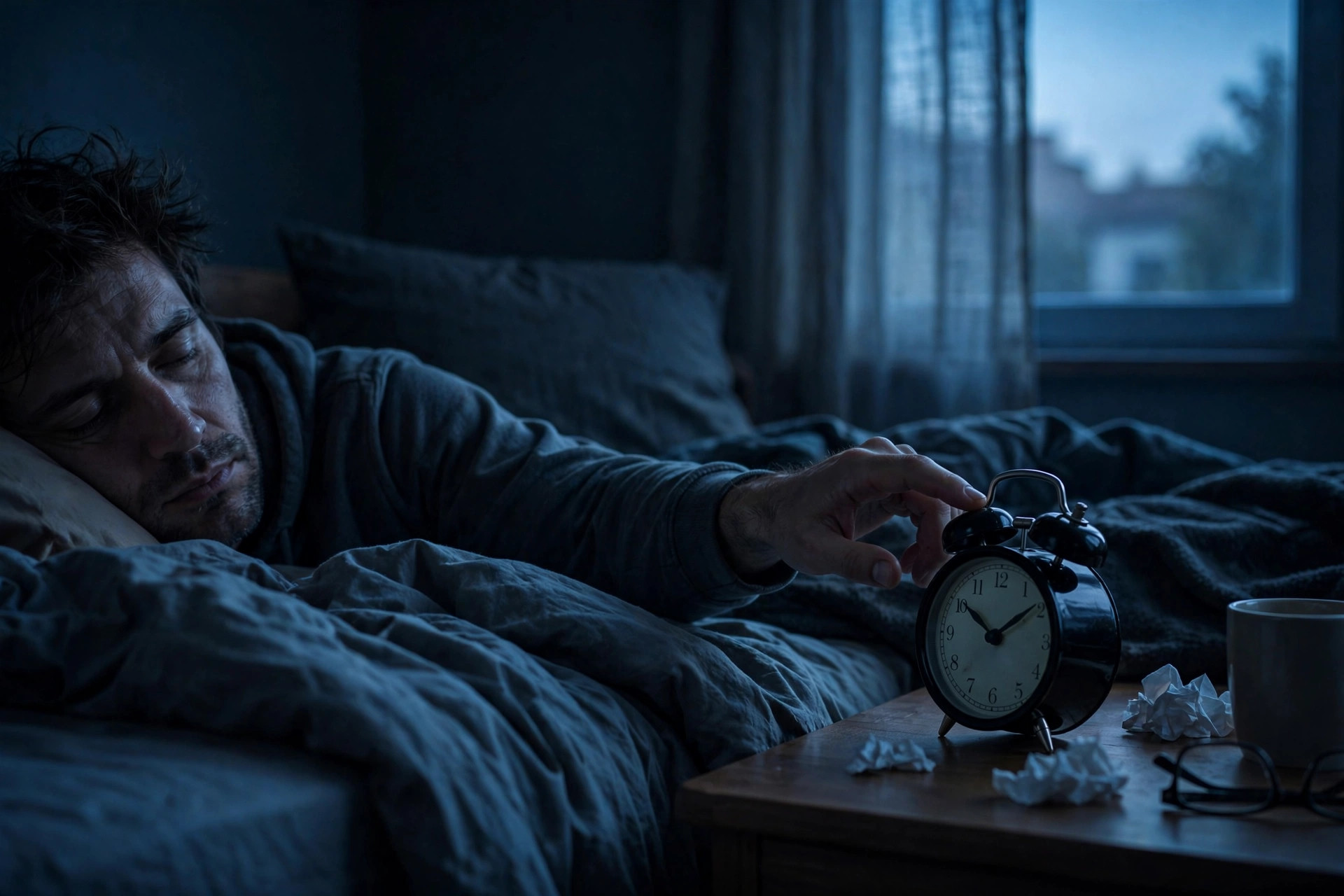
Reason 2: Those 8 Hours Were Never Really 8 Hours
Most people start counting from when they got into bed, not from when they fell asleep. The average healthy adult takes 10–20 minutes to fall asleep (sleep latency), and that’s on a good night. Scroll on your phone in bed for 25 minutes and take 15 to drift off, and your “8 hours” is already down to about 7 hours and 20 minutes.
Then there are the micro-awakenings: brief arousals between sleep cycles that you rarely remember. A few per night are normal; dozens — from a snoring partner, street noise, a too-warm room, or a full bladder — can fragment your sleep into shallow chunks while your clock still says 8 hours.
This is why sleep researchers talk about sleep efficiency: the percentage of time in bed that you’re actually asleep. A healthy sleeper runs around 85% or higher. If yours is lower, you’re spending the hours but not banking the restoration.
The fix: for one week, count your sleep from the moment you actually fall asleep, not from lights-out. Most people find they need to be in bed 8.5 hours to get 8 hours of sleep. Move your bedtime 15–20 minutes earlier and see what changes.
Reason 3: Caffeine Was Still in Your System
“But I fall asleep just fine after coffee.” That’s the trap.
Caffeine’s half-life averages 5–6 hours (and can range from 1.5 to over 9 hours depending on your genetics). So a 3 p.m. coffee is still at roughly half strength at 9 p.m. The stimulant buzz wears off in a couple of hours — but the caffeine is still parked on your brain’s adenosine receptors, quietly suppressing deep, slow-wave sleep even on nights you fall asleep without trouble.
This isn’t just theory. A well-known controlled study (Drake et al., 2013) found that 400 mg of caffeine taken even 6 hours before bed cut measured sleep by more than an hour — and participants didn’t notice. More recently, a 2026 meta-analysis covered by Sleep Medicine Reviews research found caffeine reduced total sleep by about 45 minutes on average and trimmed deep sleep by over 11 minutes — leading researchers to suggest a 9-hour caffeine cutoff before bed. Notably, about 100 mg (one small coffee) up to 4 hours before bed showed no significant disruption — it’s the afternoon second and third cups doing the damage.
The cruel cycle: you’re tired because caffeine shredded your deep sleep, so you drink more caffeine the next day, which shreds it again. If this sounds like you, the fatigue isn’t a sleep-quantity problem at all — it’s a caffeine-timing problem.
The fix: set a personal caffeine curfew — ideally 9 hours before bed (so around 2 p.m. for an 11 p.m. bedtime). Front-load your coffee into the morning and watch what happens to your mornings within a week. For a deeper dive on the half-life math, see our guide to what REM sleep does — caffeine fragments the architecture that includes it.
Reason 4: Alcohol or Screens Wrecked the Second Half of Your Night
A glass or two of wine makes you drowsy — so it must help sleep, right? Wrong. Alcohol is a sedative, not a sleep aid. It knocks you out fast, then suppresses REM sleep in the first half of the night and triggers a rebound effect in the second half: fragmented sleep, vivid dreams, sweating, and that classic 3 a.m. wide-awake stare at the ceiling. You can log 8 hours and still get almost no restorative sleep architecture.
Screens are the subtler version. It’s not only the blue light (though that does delay melatonin) — it’s the alerting content. An hour of stressful news or rapid-fire social feeds keeps your brain’s arousal systems switched on, delaying the drop in core body temperature and the melatonin rise that deep sleep depends on.
The fix: keep the last drink 3–4 hours before bed, and put screens away 60 minutes before sleep — or at least switch to something calm and dim. (We’ll go deep on the nightcap myth in our upcoming article on alcohol and sleep.)
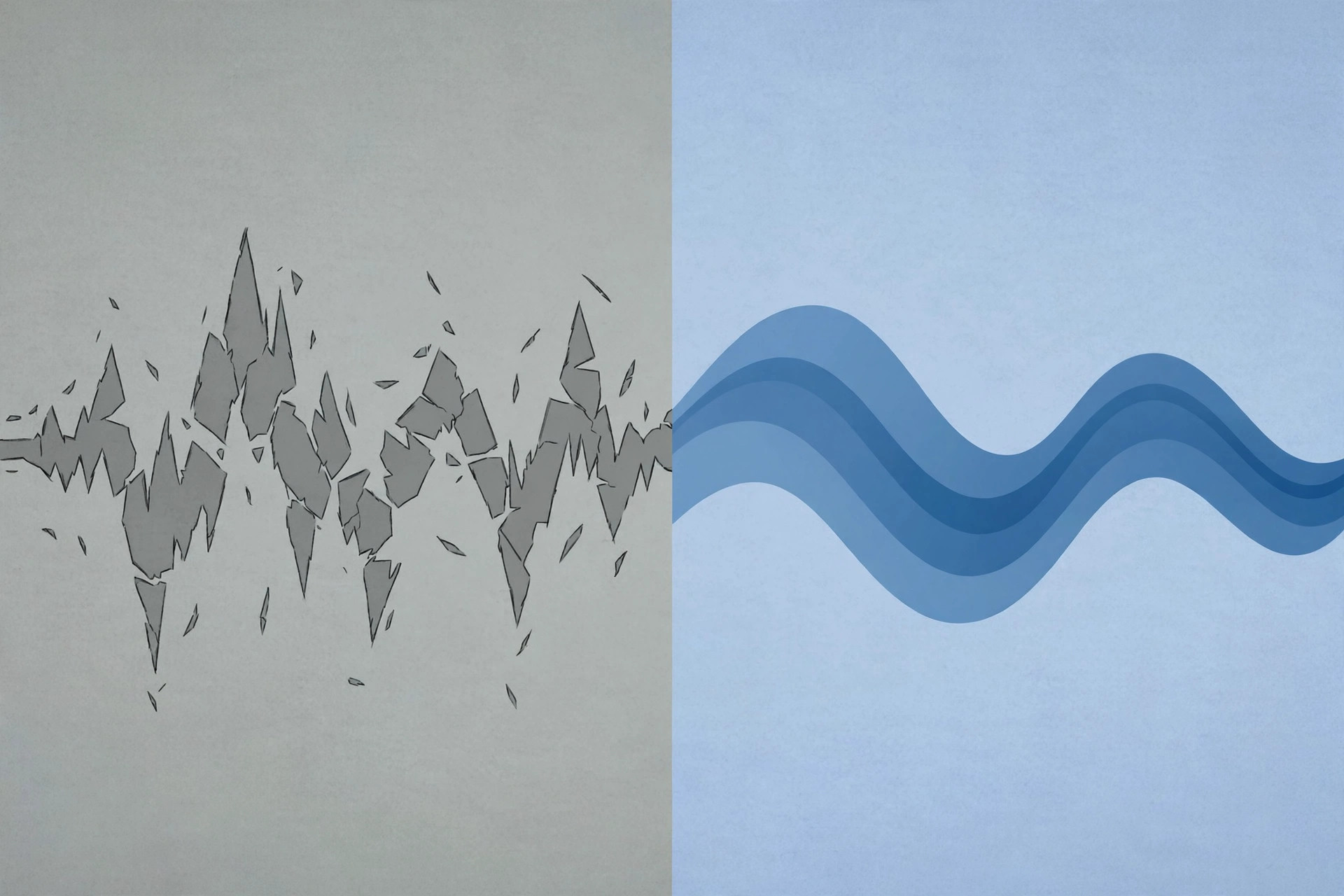
Reason 5: Your Breathing Kept Interrupting the Night
This is the one worth ruling out if the fixes above don’t work. Obstructive sleep apnea — where the airway repeatedly collapses during sleep, briefly cutting off breathing — is remarkably common and remarkably underdiagnosed. The American Academy of Sleep Medicine estimates that nearly 30 million Americans have sleep apnea, and most of them don’t know it.
Each interruption may last only seconds and never fully wake you, but it yanks your brain out of deep sleep and spikes your heart rate. Do that dozens of times a night and 8 hours in bed delivers the restoration of maybe 5. Warning signs:
- Loud, chronic snoring (or a partner who says your breathing pauses)
- Waking with a dry mouth, sore throat, or morning headaches
- Needing to urinate multiple times at night
- Daytime sleepiness despite a full night — especially while driving or in meetings
Even without full apnea, upper airway resistance from chronic snoring can fragment sleep enough to leave you tired. This is a see-a-clinician situation, not a DIY one: a home sleep study is simple, and treatment (from positional therapy to CPAP) is one of the most life-changing fixes in all of sleep medicine.
The bottom line: if you snore loudly and wake up tired every single day, don’t keep optimizing your bedtime — get evaluated.
Reason 6: Stress Kept Your Brain in Shallow Sleep
You can be unconscious for 8 hours and still not get deep sleep if your nervous system never stood down. Stress and anxiety raise cortisol and keep the brain in a state of hyperarousal — more light sleep, more brief awakenings, less of the deep slow-wave sleep that does the physical repair work.
Here’s a striking finding: in that 2026 PLOS ONE study of morning grogginess, anxiety was the single strongest predictor of prolonged sleep inertia — stronger than sleep duration itself. People with anxiety took about 14 minutes longer to clear the fog than those without, even with the same hours in bed.
The racing-mind pattern is the giveaway: you replay conversations, plan tomorrow, or jolt awake at 3 a.m. with your heart pounding. Your body was in bed for 8 hours, but your brain spent the night on guard duty.
The fix: a real wind-down ritual (not just “trying to relax”) — dim lights and no work talk for the last hour, plus a “worry journal”: spend 10 minutes writing down tomorrow’s to-dos and concerns before bed so your brain doesn’t do it at 2 a.m. We’ll cover the full racing-mind toolkit in our upcoming article on nighttime anxiety.
Reason 7: Something Medical Is Draining You
If you’ve fixed your alarm timing, your caffeine, your bedroom, and your wind-down — and you’re still exhausted after weeks of genuinely good sleep — it’s time to look under the hood. Common medical causes of persistent fatigue include:
- Iron deficiency / anemia — reduces oxygen delivery; fatigue is often the first symptom
- Hypothyroidism — an underactive thyroid slows everything, including energy
- Vitamin B12 or D deficiency — both linked to persistent tiredness
- Depression — can cause both oversleeping and unrefreshing sleep
- Medications — antihistamines, beta-blockers, some antidepressants, and blood pressure drugs commonly cause daytime drowsiness
A basic blood panel (iron/ferritin, thyroid function, B12, vitamin D) catches most of these, and it’s one of the highest-value checkups an always-tired person can get. This article is educational, not medical advice — if fatigue persists for several weeks despite good sleep habits, talk to your doctor rather than troubleshooting alone.
Your Tonight Action Plan: 5 Steps
Don’t try to fix all seven at once. Run this tonight if you keep asking why do I wake up tired after 8 hours.
- Shift your alarm 30 minutes. Use a sleep time calculator to find a wake time that’s a whole number of 90-minute cycles from your bedtime. Try it for three nights.
- Set a caffeine curfew. No caffeine within 9 hours of bed — for most people that means last coffee around 2 p.m.
- Count from sleep onset. Get into bed 15–20 minutes earlier than your “8 hours” math says you need.
- Cool, dark, quiet. Bedroom around 18°C/65°F, blackout-level darkness, and steady low sound if noise leaks in.
- Dump the day on paper. Ten minutes of writing down tomorrow’s worries before bed keeps them from ambushing you at 3 a.m.
If your mornings transform within a week, you’ve found your culprit. If nothing changes after two honest weeks, skip to the doctor — Reason 5 or 7 is calling.
When to Stop Troubleshooting and See a Doctor
See a clinician promptly if you experience any of these alongside your fatigue:
- Loud snoring with witnessed pauses in breathing or gasping
- Falling asleep during the day — while driving, working, or talking
- Morning headaches most days
- Fatigue that doesn’t budge after 2–3 weeks of improved sleep habits
- Restless, crawling sensations in your legs at night
Sleep disorders are medical conditions with medical treatments — no bedtime hack substitutes for a diagnosis.
Frequently Asked Questions
Why do I wake up tired after 8 hours of sleep?
The most common reasons are waking mid-sleep-cycle (which causes sleep inertia), not actually sleeping the full 8 hours due to time spent falling asleep and brief awakenings, or fragmented sleep quality from caffeine, alcohol, snoring, stress, or undiagnosed sleep apnea. Hours in bed don’t equal hours of restorative sleep.
Is it better to sleep 7.5 hours or 8 hours?
For many people, 7.5 hours feels better than exactly 8 — because 7.5 hours is five complete 90-minute sleep cycles, so you wake between cycles rather than in the middle of deep sleep. If a flat 8 hours leaves you groggy, try 7.5 or 9 hours (5 or 6 full cycles) instead.
Can caffeine make you tired the next day even if you fall asleep fine?
Yes. Caffeine’s half-life is 5–6 hours, so afternoon coffee is still active at bedtime. Research shows it reduces deep slow-wave sleep even when you fall asleep normally — and people typically don’t notice the damage. That lost deep sleep is what you feel the next morning.
How long does morning grogginess normally last?
A 2026 study of 2,355 adults found the average is about 16 minutes to clear morning grogginess. Lab research shows most people return to full alertness within 15–30 minutes. If your fog regularly lasts over an hour, or never fully lifts, look into sleep quality issues or talk to a doctor.
Does sleeping 8 hours but waking up a lot still count as good sleep?
Not really. Frequent awakenings — even brief ones you don’t remember — prevent your brain from settling into deep and REM sleep. What matters is continuous, uninterrupted cycles. A cool, dark, quiet room and treating any snoring or apnea are the biggest levers for sleep continuity.
When should I see a doctor about being tired after 8 hours of sleep?
See a doctor if fatigue persists for several weeks despite good sleep habits, or sooner if you snore loudly, gasp at night, have morning headaches, fall asleep during the day, or experience restless legs. A sleep study or basic blood tests (iron, thyroid, B12, vitamin D) can identify treatable causes.
The Bottom Line
Waking up tired after 8 hours of sleep is almost never a mystery — it’s a measurement problem. Either you didn’t truly sleep 8 hours, your alarm interrupted a cycle, or something quietly fragmented the night. Start with the two-minute fix: shift your alarm to land between sleep cycles with a sleep time calculator, set a caffeine curfew, and give it a week. Most people are surprised how fast their mornings change.
And if the fatigue survives all of that? That’s useful information too — it means the answer is medical, not behavioral, and a doctor’s visit is the right next step. Either way, you now know exactly where to look.
By Mark David · Published October 16, 2026 · This article is for educational purposes and is not medical advice. If you have persistent fatigue or suspect a sleep disorder, please consult a healthcare professional.
Sources
- Kim JR, Park HJ, Paik SM, et al. (2026). “Morning sleep inertia and its associated factors: Findings from a nationwide study.” PLOS ONE, 21(1): e0337992. https://journals.plos.org/plosone/article?id=10.1371/journal.pone.0337992
- American Academy of Sleep Medicine — Sleep apnea statistics and clinical guidance (nearly 30 million US adults affected, most undiagnosed).
- National Sleep Foundation — How sleep works: sleep cycles, stages, and sleep hygiene guidance.
- Drake C, Roehrs T, Shambroom J, Roth T. (2013). “Caffeine Effects on Sleep Taken 0, 3, or 6 Hours before Going to Bed.” Journal of Clinical Sleep Medicine, 9(11): 1195–1200.