Is 6 Hours of Sleep Enough? The Honest Science Answer
Short answer: no. For the vast majority of healthy adults, six hours of sleep a night is not enough — and the research on this is some of the most replicated in all of sleep science.
The CDC and the American Academy of Sleep Medicine both recommend at least 7 hours of sleep per night for adults aged 18–60, and the AASM/Sleep Research Society consensus explicitly classifies six hours or less as “inappropriate” to sustain optimal health. In a landmark study, volunteers who slept six hours a night for two weeks showed cognitive impairment equivalent to up to two full nights without sleep — while insisting they felt fine.
But this isn’t a scare piece. In this guide, you’ll learn: what six-hour nights actually do to your brain and body, the cycle-math reason six hours always shortchanges you, the rare genetic exception that genuinely lets some people thrive on less, a three-question self-test to tell which group you’re in, and — if six hours is all life allows right now — how to minimize the damage and climb back to a full night’s rest.
By the end, you’ll know exactly how much sleep you actually need — and how to get it.
What 6 Hours Does to Your Brain: The Study That Ended the Debate
In 2003, researchers at the University of Pennsylvania published an experiment that remains one of the most cited in sleep science. Volunteers were restricted to 4, 6, or 8 hours of sleep per night for 14 consecutive days, and their cognitive performance was tested repeatedly with tasks measuring attention, reaction time, and working memory. (Van Dongen et al., SLEEP, 2003)
The results for the six-hour group were startling:
- By day 14, their cognitive performance was as impaired as people who had gone one to two nights with zero sleep.
- The decline was cumulative and dose-dependent — it got worse every day, with no plateau.
- But their self-reported sleepiness flatlined. After a few days, they stopped feeling worse, even as their objective performance kept dropping.
The bottom line: six-hour sleepers don’t adapt — they adapt to feeling impaired. The deficit accumulates invisibly. This is the single most important finding for anyone who says “I’m fine on six hours.”
Why Your Brain Can’t Be Trusted on This
Subjective alertness and objective performance diverge under chronic sleep restriction. Your brain recalibrates what “normal” feels like, and the fog becomes your baseline. This has real-world consequences:
- Reaction time slows — attention-dependent functions like vigilance, response stability, and processing speed are hit hardest.
- Decision-making degrades — impaired judgment and increased risk-taking show up before you feel tired.
- Microsleeps happen without awareness — seconds-long lapses into sleep that you can’t feel. Experts warn that drowsy driving is as dangerous as drunk driving.
- Emotional control frays — short sleep makes people more irritable, anxious, and prone to poor emotional regulation.
And recovery isn’t instant. Follow-up work has estimated that participants needed the equivalent of about 10 hours of recovery sleep to return to baseline performance — more than one normal night can provide.
The Health Bill for Chronic 6-Hour Nights
Cognitive impairment is only the down payment. Decades of cohort research tie short sleep to a catalogue of long-term health risks:
- Heart and circulation: Multiple meta-analyses link chronic short sleep to higher rates of high blood pressure, heart disease, and stroke. One widely cited meta-analysis pooling 1.38 million participants found short sleep associated with a small but consistent increase in mortality risk (relative risk ≈ 1.12). (Cappuccio et al., Sleep, 2010)
- Metabolism: Sleep restriction disrupts insulin sensitivity within days and is associated with weight gain, obesity, and higher type 2 diabetes risk — partly through the hunger hormones ghrelin and leptin, which drive appetite when you’re under-slept.
- Cognition over the long term: The Whitehall II study followed 5,431 adults for years and found that shifts toward shorter sleep duration predicted faster cognitive decline. A pooled analysis of nearly 29,000 adults found the fastest cognitive decline at both extremes — four hours or fewer and ten hours or more.
- Immunity and mood: Chronic sleep loss is linked to weakened immune responses and higher risk of depression and anxiety.
The bottom line: six hours doesn’t just make you tired — it quietly raises the odds of the diseases you least want, year after year. And the population data is sobering: according to the CDC’s 2024 National Health Interview Survey, 30.5% of U.S. adults averaged less than seven hours of sleep — nearly a third of the adult population running a deficit.
The Cycle-Math Problem: Why Six Hours Always Shortchanges You
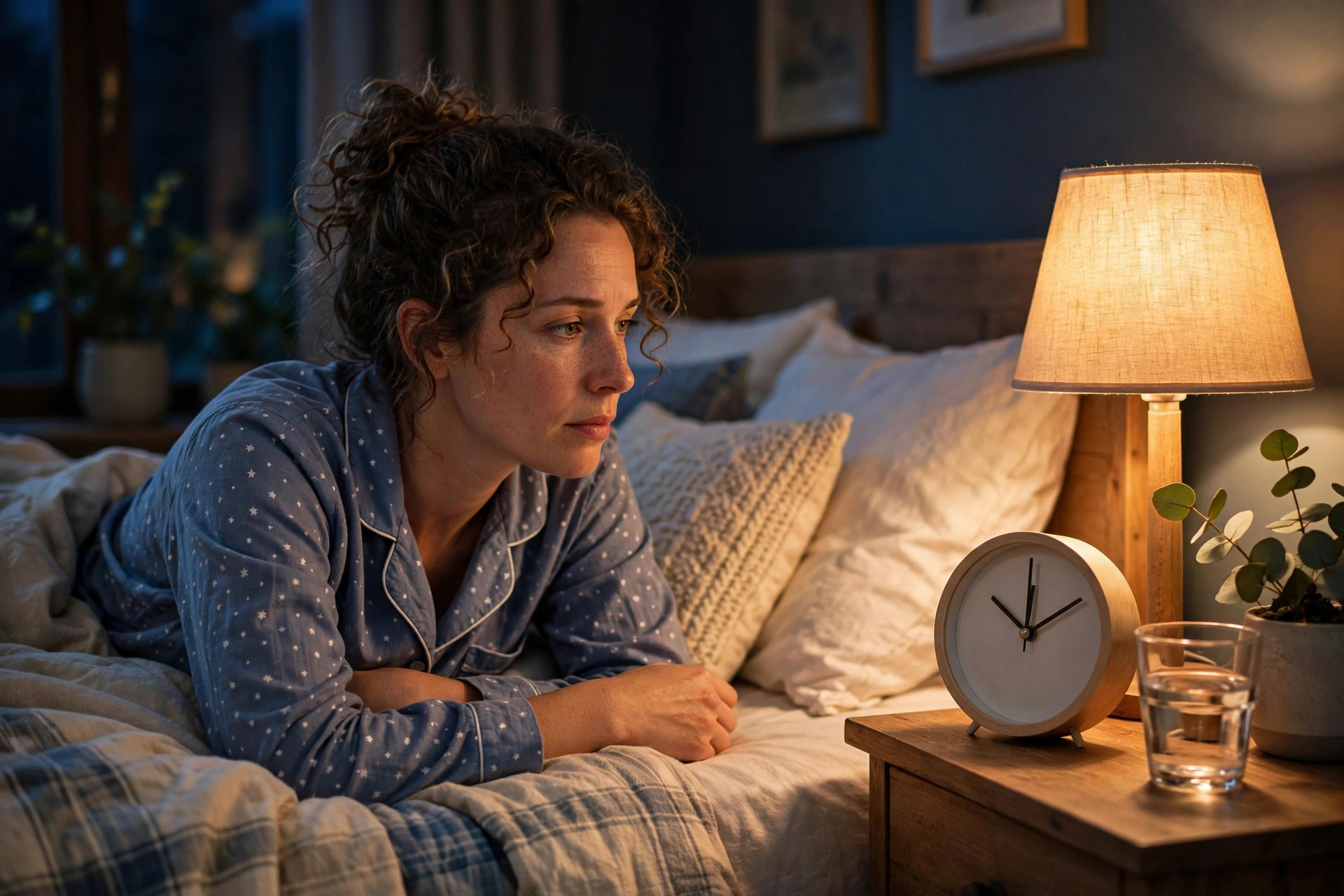
Here’s the angle the guidelines don’t explain — and the one a sleep-calculator site should. Sleep isn’t a liquid you pour into a jar; it’s a sequence of cycles, each about 90 minutes long (in reality, 70–110 minutes). Each cycle moves through light sleep, deep sleep, and REM sleep.
With six hours (360 minutes), you get roughly four cycles — and only if you fall asleep instantly and every cycle runs a full 90 minutes. In practice, you get less. And there’s a cruel twist: early cycles are rich in deep sleep, while REM sleep is concentrated in the later cycles — the ones you’re cutting off.
| Time in Bed | Full Cycles | What You Get |
|---|---|---|
| 6 hours | ~4 | Deep sleep covered, but REM heavily cut — the memory-consolidation and emotional-processing stages live in those final cycles |
| 7.5 hours | ~5 | Full cycle coverage with adequate REM — the realistic minimum for most adults |
| 9 hours | ~6 | Full coverage plus buffer for sleep latency and natural wake-ups |
So six hours isn’t “one hour less than seven.” It’s the hour that contains most of your REM sleep. That’s why six-hour sleepers often feel they got “deep” sleep but still wake up foggy — they did sleep deeply, but they skipped the dreaming stages where the brain consolidates memories and processes emotion.
The bottom line: sleep in whole cycles or don’t bother counting hours. If you need to set a realistic floor, aim for 7.5 hours — five full cycles — rather than the guideline’s 7-hour minimum.
The Genetic Exception: Are You a Natural Short Sleeper?
True short sleepers exist. They’re people who genuinely need less sleep — not people who’ve learned to tolerate a deficit. Researchers have identified rare genetic variants linked to the natural short-sleep trait, including mutations in the genes DEC2, ADRB1, NPSR1, and GRM1.
The science is still moving fast: in May 2025, researchers reported a new mutation in the SIK3 gene (hSIK3-N783Y) that appears to underlie natural short sleep in a human carrier, published in the Proceedings of the National Academy of Sciences. Some carriers sleep as little as 4–6 hours with no apparent cognitive or health penalty — and paradoxically feel worse when they sleep longer.
But keep this in perspective: these variants are extremely rare, estimated at a small fraction of one percent of the population. If you need an alarm clock to wake up, feel drowsy in the afternoon, or sleep significantly longer on weekends, you almost certainly don’t carry one.
The Honest Three-Question Self-Test
Forget “I feel fine.” Here’s the test sleep researchers would actually use to judge whether your sleep is sufficient — answer honestly:
- Could you wake up tomorrow without an alarm and feel refreshed? If the alarm is what gets you vertical, you’re not finishing your natural sleep.
- Do you sleep substantially longer on weekends or days off? A weekend lie-in of 2+ hours is your body presenting the bill for the week.
- Would you function without caffeine holding the line? If removing your morning coffee would collapse your day, the coffee is masking a deficit, not fueling productivity.
The bottom line: if you answered “no” to any of these, your body is asking for more sleep — whatever your conscious experience says. True short sleepers pass all three effortlessly.
“But I Feel Fine on Six Hours” — Why That Doesn’t Mean What You Think
About a third of U.S. adults sleep six hours or less on a typical night. The vast majority aren’t efficient sleepers; they’re adapted short sleepers — people whose subjective perception has drifted away from their objective capacity.
Signs you may be running on hidden sleep debt even if you “feel fine”:
- Needing caffeine to feel normal rather than to feel extra-sharp
- Drowsiness during monotonous activities — meetings, long drives, afternoon TV
- Weekend sleep that stretches 2+ hours longer than weekday sleep
- Increased irritability, impatience, or emotional reactivity
- More frequent colds or slower recovery from illness
- Weight creep without an obvious dietary cause
- Waking up already tired, or needing a long time to “come online”
The bottom line: feeling fine on six hours is the expected symptom of chronic six-hour sleep, not evidence against it.
When Six Hours Is All You Can Get: Damage Control
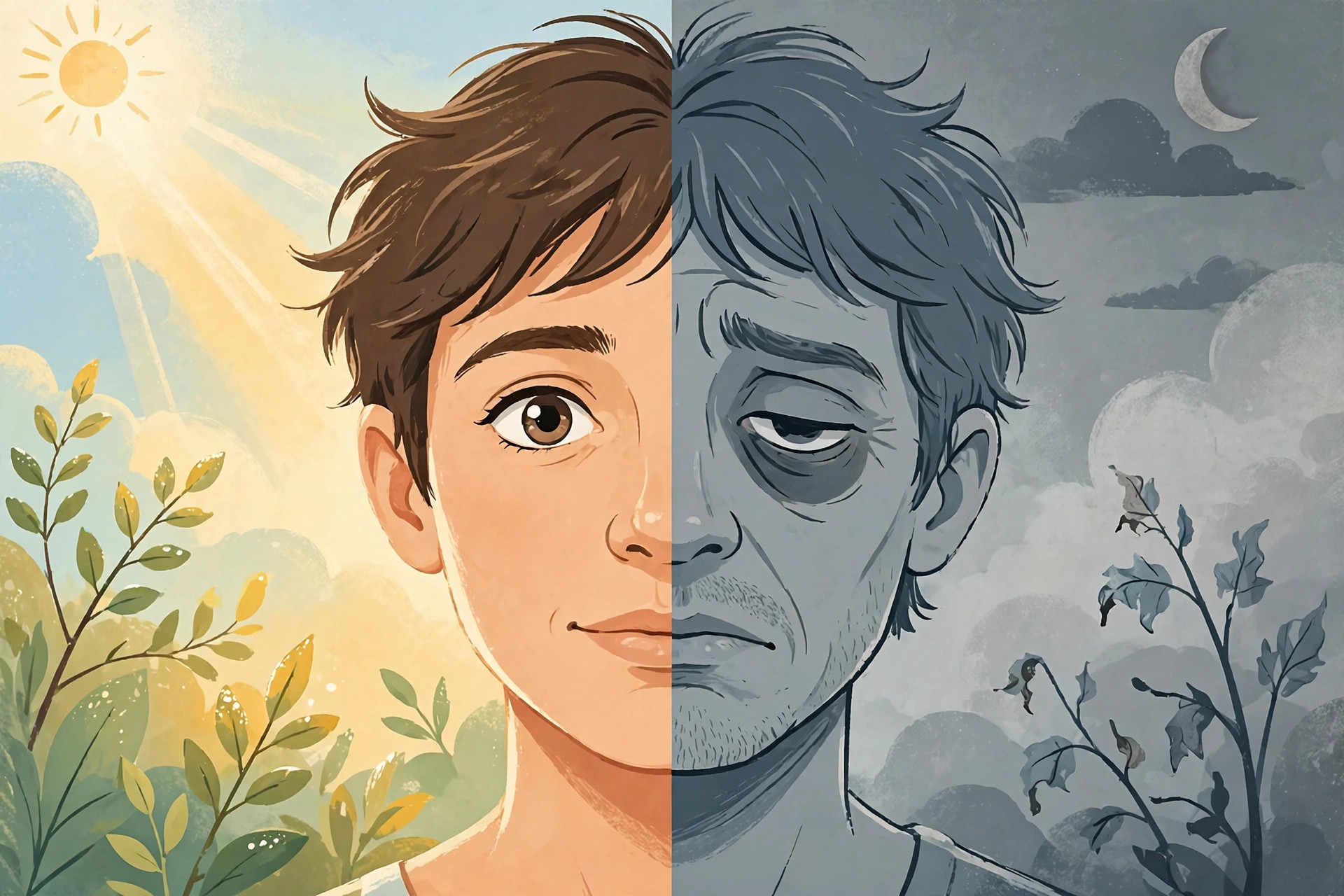
Sometimes life doesn’t cooperate — new babies, shift work, exams, caregiving. If six hours is genuinely all you have right now, here’s how to make those six hours count and limit the damage:
- Keep the timing consistent. Regular bedtimes and wake times — including weekends — protect your circadian rhythm, which predicts health outcomes independently of sleep length.
- Guard the cycles you get. Time your alarm to land between cycles rather than mid-cycle. A sleep time calculator can pick bedtimes that fit whole cycles into the hours you have, so you wake in light sleep instead of deep sleep.
- Nap strategically, not desperately. A 20-minute early-afternoon nap boosts alertness without the grogginess of a longer nap; a full 90-minute nap gives you one complete cycle. Avoid napping after mid-afternoon.
- Use light like medicine. Bright morning light anchors your circadian clock and improves alertness; dim lights in the evening protect melatonin onset.
- Don’t try to “catch up” in one night. Research suggests partial payback is possible but one monster sleep won’t erase weeks of restriction — and it disrupts your rhythm. Extend sleep by 30–60 minutes a night instead.
- Watch the crutches. Caffeine after mid-afternoon and alcohol near bedtime both fragment sleep — the alcohol may help you fall asleep but it suppresses REM, which is exactly what a six-hour sleeper can’t afford to lose.
And know the red flags that mean it’s time to see a professional: loud snoring with breathing pauses, persistent insomnia despite good habits, falling asleep in dangerous situations, or daytime sleepiness that doesn’t lift.
How to Climb From 6 Hours to 7.5: A Practical Plan
Most six-hour sleepers don’t need a revolution — they need about 90 more minutes, which is one full sleep cycle. Here’s a two-week ramp:
- Week 1: add 30 minutes. Move bedtime 15 minutes earlier every two to three nights. Tiny shifts stick; hour-long jumps don’t.
- Fix the entry cost. If it takes you 30+ minutes to fall asleep, your “8 hours in bed” may be 7 hours of sleep. A consistent wind-down routine, a cool dark room, and screens off 30–60 minutes before bed cut sleep latency.
- Calculate your bedtime, don’t guess it. Count back 7.5 hours from your wake time in 90-minute blocks — or use a bedtime calculator that does the cycle math for you. Planning the bedtime makes it concrete; guessing makes it aspirational.
- Protect the last cycle. The 5th cycle — the one between hour 6 and 7.5 — is REM-rich. Treat it as non-negotiable, not optional.
- Week 2: add another 30 minutes. Keep shifting until you land at 7.5 hours in bed with a consistent wake time.
The bottom line: you don’t have to become an eight-hour sleeper overnight. One extra cycle — 90 minutes — is the highest-return upgrade in sleep science.
Frequently Asked Questions
Is 6 hours of sleep enough for a teenager?
No — teens need more than adults. The National Sleep Foundation recommends 8–10 hours for teenagers aged 13–18. Six hours is a severe deficit for a developing brain and is linked to worse academic performance, mood problems, and higher accident risk.
Can you train yourself to need less sleep?
No. Research shows you can train yourself to feel less impaired, but objective cognitive performance keeps declining with chronic restriction. The adaptation is in perception, not in biology — with the exception of rare genetic short sleepers.
Is 6 hours of sleep enough for older adults?
The CDC recommends 7–8 hours for adults 65 and older. Sleep needs decline slightly with age, but six hours is still below the recommended range, and studies link short sleep in older adults to faster cognitive decline.
Is 6 hours of sleep better than 5?
Yes — more sleep is almost always better in this range. But the jump from 6 to 7.5 hours matters more than the jump from 5 to 6, because 7.5 hours completes a fifth full sleep cycle rich in REM sleep.
Does napping make up for 6 hours of sleep?
Partially. A 20-minute nap improves alertness and a 90-minute nap completes a full cycle, but naps don’t fully replace consolidated nighttime sleep — especially the REM-heavy late cycles. Think of naps as damage control, not a cure.
How do I know if I’m a natural short sleeper?
The honest signs: you fall asleep easily, wake up naturally without an alarm feeling refreshed, maintain steady energy all day without caffeine, and don’t oversleep on weekends. True short sleep runs in families and is linked to rare gene variants (DEC2, ADRB1, NPSR1, GRM1, SIK3). If that doesn’t describe you, you almost certainly need more sleep.
The Honest Verdict
Is 6 hours of sleep enough? For a tiny fraction of the population with rare genetic variants — yes, genuinely. For everyone else — and that almost certainly includes you — no. The science is unusually clear on this one: the AASM consensus, the CDC guidance, the 14-day restriction studies, and the long-term cohort data all point the same way.
The most liberating part of the research is also the most practical: you don’t need a perfect 9 hours. The single highest-value move is adding one cycle — getting from 6 hours to 7.5 — which restores the REM-rich sleep your brain has been quietly doing without.
Stop guessing at bedtime. Use our free sleep time calculator to find the bedtime that gives you five full cycles before your alarm — and start tonight.
Sources
- Watson NF, Badr MS, Belenky G, et al. Recommended amount of sleep for a healthy adult: a joint consensus statement of the American Academy of Sleep Medicine and Sleep Research Society. Sleep. 2015;38(6):843-844. — American Academy of Sleep Medicine
- Van Dongen HPA, Maislin G, Mullington JM, Dinges DF. The cumulative cost of additional wakefulness: dose-response effects on neurobehavioral functions and sleep physiology from chronic sleep restriction and total sleep deprivation. Sleep. 2003;26(2):117-126.
- CDC. Short Sleep Duration and Sleep Difficulties Among Adults: United States, 2024. NCHS Data Brief No. 559. — cdc.gov
- CDC. About Sleep: How Much Sleep Do I Need? — cdc.gov
- National Sleep Foundation. How Much Sleep Do We Really Need? — sleepfoundation.org
- Cappuccio FP, D’Elia L, Strazzullo P, Miller MA. Sleep duration and all-cause mortality: a systematic review and meta-analysis of prospective studies. Sleep. 2010;33(5):585-592.
- hSIK3-N783Y natural short sleep study. Proceedings of the National Academy of Sciences. May 2025. — Medical Xpress summary
This article is for educational purposes only and is not medical advice. If you have persistent sleep problems, talk to a healthcare professional or sleep specialist.